
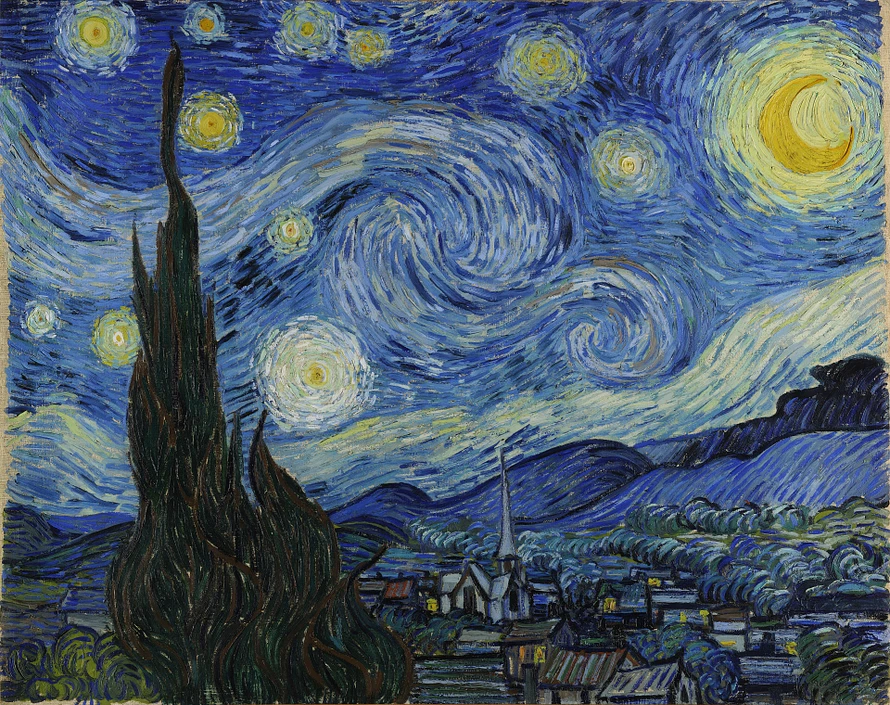
New research points to 22 July 1889 — but Van Gogh's own letters raise a fascinating contradiction.
What if the extraordinary swirling sky of Vincent van Gogh's The Starry Night was not simply a product of his imagination?
A newly published scientific study suggests that the stars, Moon and planets in the famous painting may correspond to a real dawn sky above Saint-Rémy-de-Provence, France.
The researchers believe they've found a particularly close match: 22 July 1889.
But there's a problem. Historical evidence suggests Van Gogh had already painted the scene weeks earlier.
So have astronomers solved a 137-year-old mystery — or uncovered a new one?
The scientific discovery
Published on 22 October 2026 in the journal Scientific Reports, the study was led by researcher Elijah Jeong-hyun Kim and colleagues in South Korea.
The team combined astronomical calculations, historical weather records, landscape observations and Van Gogh's correspondence to reconstruct what the artist might have seen from Saint-Rémy in 1889.
Their investigation focused on three features of the painting: the crescent Moon, the bright planet Venus and the Hyades star cluster in the constellation Taurus.
Using mathematical comparisons of star positions and an earlier landscape sketch to estimate Van Gogh's field of view, they identified a striking resemblance to the sky shortly before sunrise on 22 July 1889.
The Moon's phase also fitted their proposed date more closely than some earlier June interpretations.
Historical weather records and references to the summer heat in Van Gogh's letters provided additional supporting clues.
The researchers suggest that the painting may preserve an actual celestial arrangement, transformed through Van Gogh's extraordinary artistic vision.
But does the evidence establish when he painted it?
The problem with the historical record
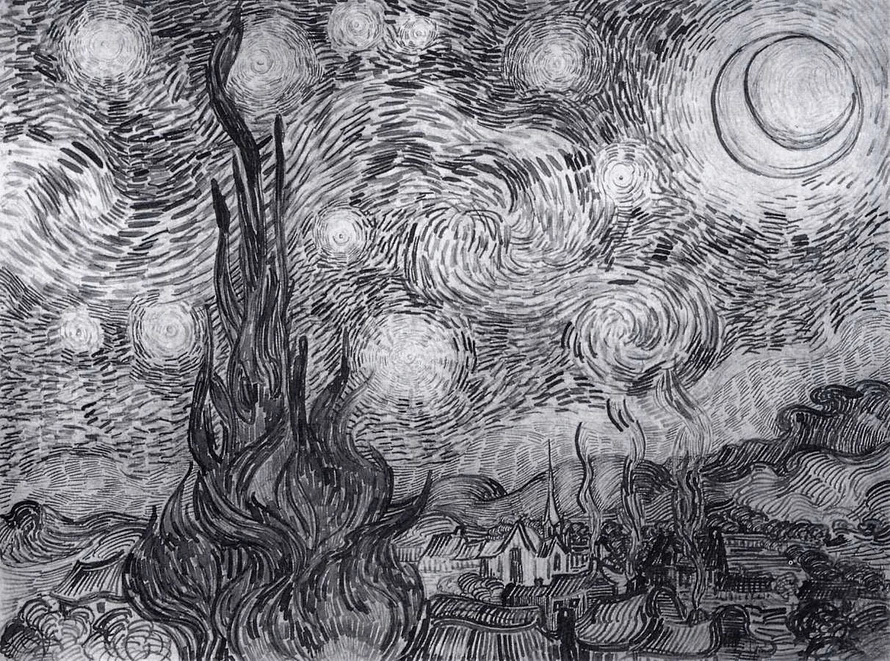
Vincent van Gogh, The Starry Night, 1889. This drawing is identified by the editors of Van Gogh's correspondence as one of those sent to Theo in early July — an identification disputed by the new study.
Art historians have traditionally dated The Starry Night to June 1889, shortly after Van Gogh entered the Saint-Paul-de-Mausole asylum.
On 18 June, he wrote to his brother Theo describing a new study of a starry sky, generally identified with this painting.
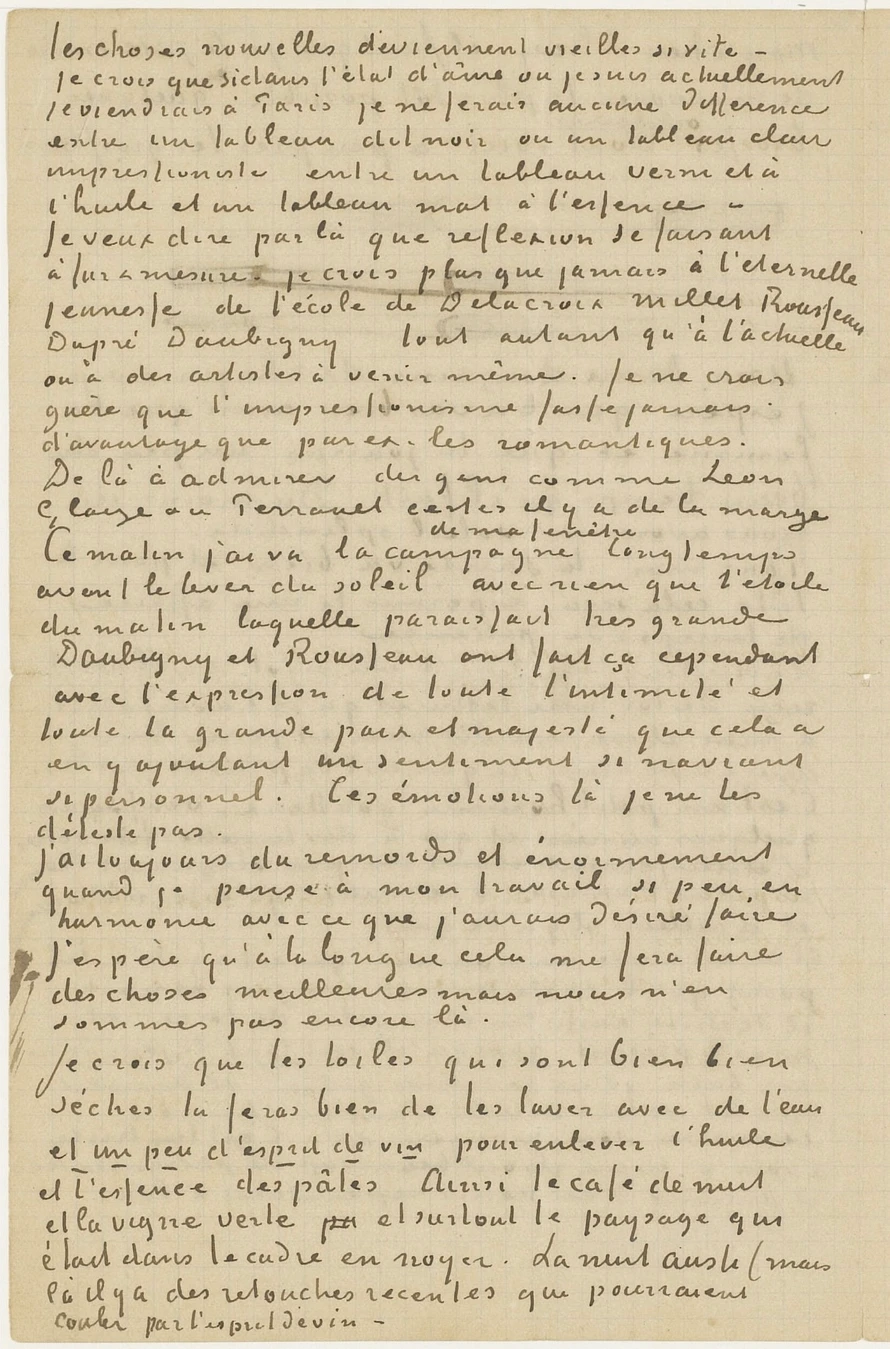
Van Gogh's letter to his brother Theo, written between 31 May and 6 June 1889, describing the morning star he saw before sunrise.
More significantly, on 2 July 1889, Van Gogh wrote that he was sending Theo a collection of drawings based on paintings he had been working on.
The scholarly editors of his correspondence identify a drawing of The Starry Night among them.
Vincent van Gogh, The Starry Night, 1889. This drawing is identified by the editors of Van Gogh's correspondence as one of those sent to Theo in early July — an identification disputed by the new study.
If that identification is correct, the painting's composition already existed twenty days before the proposed astronomical observation.
The Van Gogh Museum maintains that the work dates from June, citing the letters, the artist's painting materials and his subsequent illness.
However, the researchers challenge the assumption that the Starry Night drawing was necessarily part of the July shipment. They also argue that the June correspondence does not establish when the canvas was completed.
The dating question therefore remains contested.
Not everyone agrees about the stars
There are astronomical objections, too.
Astronomer Donald Olson, who has previously investigated the skies depicted in historical paintings, has questioned both the proposed stellar identifications and the researchers' assumptions about Van Gogh's field of view.
The study's authors acknowledge that their findings do not prove a single date of completion. Van Gogh might also have combined observations from several different mornings.
And The Starry Night was never a literal depiction of everything outside his window.
The village below was partly imagined. The church resembles buildings from his native Netherlands, while the enormous cypress and swirling heavens reveal just how freely he transformed his observations.
The painting exists somewhere between reality and imagination.
A mystery beyond the stars
There is something remarkable about the possibility that science can reconstruct a sky Van Gogh may have watched more than a century ago.
But even if astronomers eventually identify the precise arrangement of stars that inspired him, another question will remain.
What did he see in that sky that compelled him to transform it into something so extraordinary?
We can calculate the positions of the heavens. We can read his letters and examine his brushstrokes.
But we can never fully reconstruct the thoughts and emotions behind them.
And perhaps that is part of why The Starry Night still moves us today.
The scientific mystery may one day be resolved. The human mystery is something altogether deeper.
Explore our Van Gogh Collection
Sources and further reading
-
Kim et al., The actual sky of Van Gogh's Starry Night: a multidisciplinary reconstruction, Scientific Reports, 22 October 2026
-
Vincent van Gogh, Letter 784 to Theo, 2 July 1889 — including scholarly notes on the drawings
-
The Guardian, 22 October 2026 — reporting the Van Gogh Museum's response and astronomers' objections